People often arrive with a board they have already bought and ask us to engrave it. Sometimes that works beautifully. Sometimes the wood fights the laser and the result looks muddy no matter how good the artwork was. The difference is almost entirely the material.
What the laser is actually doing
A laser does not print. It burns away a controlled amount of surface, and what you see is the contrast between the burnt line and the wood around it. That means two things decide how good an engraving looks: how light the wood is to begin with, and how evenly it burns.
The woods we reach for
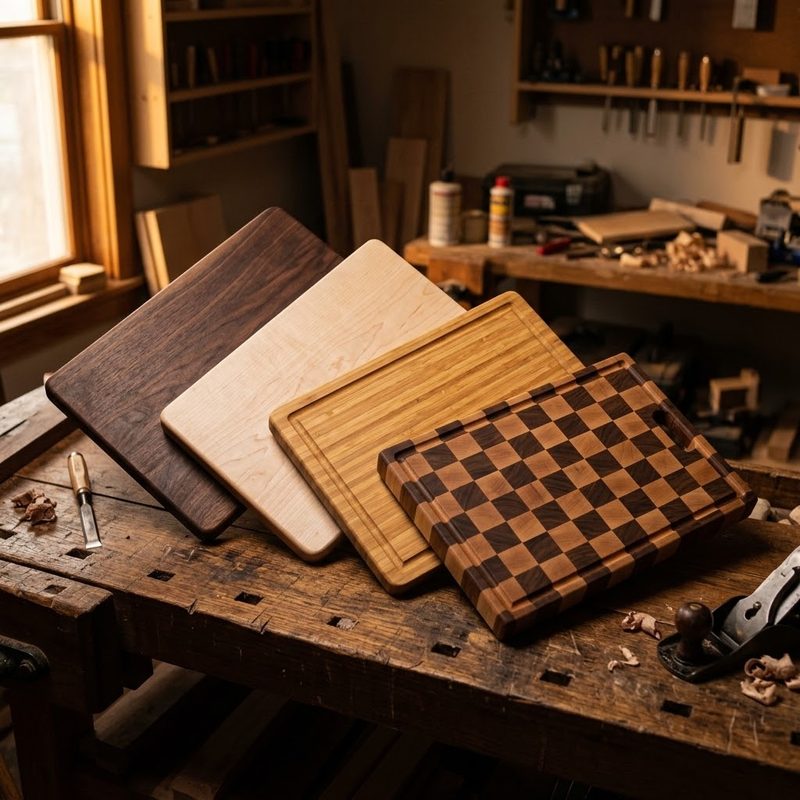
- Maple. Pale, tight, even grain. It gives the cleanest fine detail of anything we use, which is why handwriting and small text almost always goes on maple. It is also hard-wearing enough to be a real kitchen board rather than a display piece.
- Walnut. Dark and rich, with the strongest contrast of the lot for bold designs. Fine text is harder to read on walnut because the engraved line is not much darker than the wood, so we size type up when we work on it.
- Cherry. A middle ground that ages beautifully — it darkens over the first year, and the engraving stays put while the board around it warms up.
- Bamboo. Technically a grass, and it engraves with a distinctive high-contrast brown. It is inexpensive and hard, and it is the right answer when someone wants a lot of boards for a low price. It is also less forgiving of very fine detail.
End grain: beautiful, difficult
End-grain boards — the chequerboard-looking ones — are the best boards to actually cook on, because the fibres stand vertically and close around the knife. They are also the hardest to engrave cleanly, because each block burns at a slightly different rate and the result can look patchy.
We do engrave them. We just keep the design bold, avoid small text, and tell you in advance that the finish will have more variation than it would on a face-grain maple board.
What we quietly avoid
Very oily tropical hardwoods, boards with a thick varnish or plastic-style coating, and anything glued up with a visible epoxy line. Coatings scorch rather than engrave and leave a smell you do not want near food; oily woods burn unevenly.
If you already own the board, send us a photo before you post it to us. It takes us a minute to tell you whether it will mark cleanly, and it saves you the postage if it will not.
One last thing about size
A design that looks right on a screen is often too large on a board. Leave a clear margin around the engraving, keep the centre of a working board free if it is going to be used, and put recipes and long text on the back. The board still gets used; the engraving still gets read.
Want one of these made
for someone?
Browse what we make, or send us the idea and we will quote it honestly before you pay anything.